
Don't Throw In the Trowel
- Diana Pierce
- Apr 15
- 5 min read
A Chat with Rhonda Fleming Hayes
By Diana Pierce | April 15, 2026

If you’ve ever looked out at your garden and thought, “I just can’t keep up like I used to,” you’re not alone.
However, you’re not done either. You have options.
That’s the uplifting message at the heart of a new book by Minneapolis garden writer and photographer Rhonda Fleming Hayes.
Rhonda Fleming Hayes is a Minneapolis-based garden writer, photographer, and author of Pollinator Friendly Gardening. Her new book, Garden for Life: Strategies for Easier, Greener, More Joyful Gardening as We Age, goes on sale April 21, 2026, nationwide.
I had the pleasure of sitting down with Rhonda to talk about what inspired it, what surprised her along the way, and why she’s convinced your best gardening days are still ahead of you.
What sparked the idea for Garden for Life?
For Rhonda, it started close to home. “Once I started getting into my late 50s, approaching my 60s, I realized I didn’t have the same energy as before. I wasn’t up to an all-day gardening marathon anymore.”
Her own shift from a series of one-acre gardens to a smaller home in Minneapolis made her start thinking differently about what gardening could look like as life changes. At the same time, her work as a garden writer put her in front of gardeners in their 70s and 80s who were tending some of the most beautiful gardens she’d ever seen. “Maybe they found the fountain of youth,” she said, “or the garden of youth.”
When you say gardening as we age, what does that mean to you?
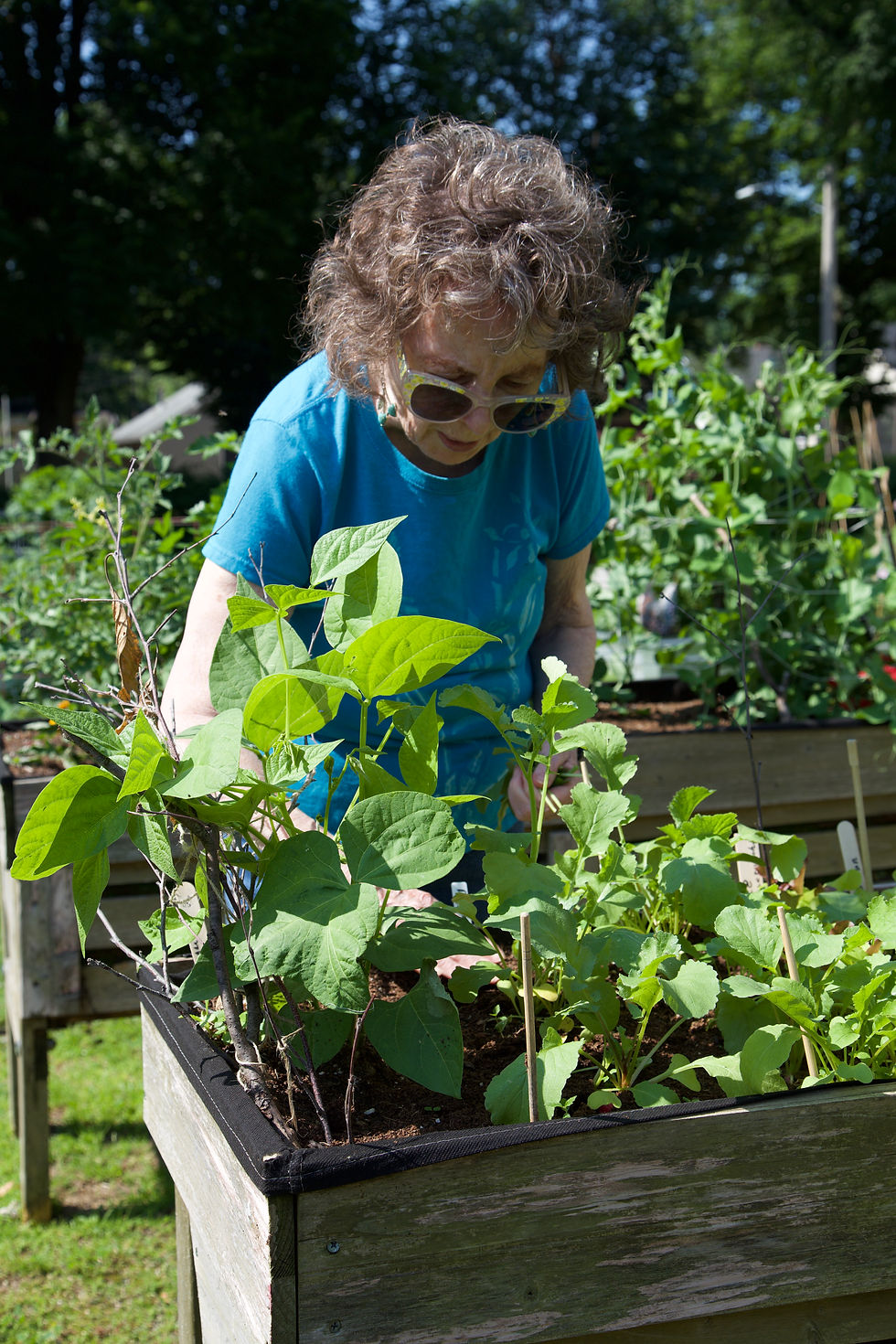
"As you start approaching your 60s, you’re going through a lot of changes with your body. You might not have the stamina you had before. You might be having joint issues or other health issues. And then your lifestyle may be going under big changes. You might be approaching retirement. You might have grandkids. Lots of things vying for your time.”
She’s quick to note that it cuts both ways. Some people suddenly have more time in retirement and approach gardening in an entirely new way. “Different situations for different people, but it’s definitely a time of big changes.”
What’s one of the big changes you personally found that is in this book?
Rhonda offered two practical starting points.
First: reduce or eliminate your lawn. “Whether you mow it yourself or you’re paying somebody, that can be a big time and money suck. Replace some of it with low-maintenance flowering shrubs or small trees that still give you a lot of interest.”

Second: think vertically. “I always say you should grow up. Start thinking about raised beds, elevated gardening beds, growing towers, and big containers that bring plants up close and personal, where you can play with them versus getting down on your knees.”
When you talk about right-sizing a garden, what do you mean?
“I talk about evaluating your garden because your garden is connected to your home. You may be deciding if you want to age in place in your home. Or can you garden in place in your garden? That’s the first part of right-sizing.”
If the size, the chores, the trip hazards, or unwieldy stairs feel like too much, downsizing to a smaller home might make sense. But the goal is finding the sweet spot. “You want enough gardening to satisfy that itch, enough that you reap some benefits from it. You’re still maintaining your connection to nature. You want to go from the more joyful part of it and avoid the back-breaking chores.”
Was there any particular aha moment while working on the book?
Rhonda’s answer was unexpected. She found herself reckoning with ageism, including her own.
“I realized our society still supports a lot of ageist thinking. I had to kind of scold myself for some of that I had brought on to myself. I have to think in a better way and not call myself an old woman.”
She was also surprised by the sheer scope of the topic. “I published my last book at 60. Now I’m approaching 70 with my second book. The fact that I just did it at this age, and was able to pull it off, was a surprise. I’m telling people it’s never too late to pick up a new project.”
When you say it’s okay to ask for help, what do you mean by that?
“At some point, as your body is aging, some chores can start to be dangerous, or you can suffer an injury from repetitive motions. If you’re up on a ladder and you fall and hit your head, you’ll probably lose at least one gardening season.”
Rhonda admits it took her a long time to stop thinking of outside help as cheating.
“I used to go out there and work right alongside them, like, I’m not sloughing off. And I have finally gotten to the point where I’m like, hey, you’re going to help me with the fall cleanup. I’m going to sit inside and do something else. I’ve earned it.”
She also recommends matching the help to the task — sheer muscle for heavy lifting, a certified arborist for trees, a landscape architect or designer for a fresh perspective on your space.
What do you hope readers take away?
“Don’t throw in the trowel, because you want to continue to reap the benefits of gardening. It doesn’t have to be a big garden. It can simply be a little patio with some containers. That connection with nature, that continued movement, using your body and challenging your mind. It’s so important.”
She ended our conversation with a laugh and some more advice.
“Go ahead and play pickleball. But don’t stop gardening. Because with pickleball, you don’t get fresh tomatoes and you don’t get bouquets of flowers.”

If you’d like to meet Rhonda in the Twin Cities areas her book launch is on April 21 at 7pm at Magers and Quinn in Minneapolis. It’s a free event but requires registration.
Here’s the link:
You can also find her at the Eden Prairie Library on May 6; Subtext Books (event at the University Club, St. Paul) on May 7; Thinking Spot Books in Wayzata on May 9; and signing books at the Spring Open House at Heidi’s GrowHaus in Corcoran on May 2.
Meanwhile: Garden for Life: Strategies for Easier, Greener, More Joyful Gardening as We Age goes on sale April 21, 2026, nationwide.
$29.95 USD / $40.00 CAN.
Published by Chelsea Green, distributed through Penguin Random House. Available wherever books are sold.
Diana

© 2026 Diana Pierce
Comments